Lai Administrations' Response Leaves Taiwan More Isolated
China Times Opinion, June 2, 2026
Japan and the Philippines recently issued a joint statement announcing their decision to initiate negotiations on overlapping Exclusive Economic Zones (EEZs) and continental shelf maritime boundaries. In response, the Ministry of Foreign Affairs (MOFA) stated: “The peaceful resolution of maritime issues through dialogue and in accordance with international law by Japan and the Philippines is consistent with our longstanding position. MOFA welcomes this development and looks forward to the three parties jointly making concrete contributions to regional peace and stability as well as the protection of the marine environment.” This issue has already attracted considerable attention from Taiwan’s academic and policy communities, because its consequences will undoubtedly affect Taiwan’s claims to maritime space and the protection of its maritime rights, and its subsequent impact should not be underestimated.
First, it will compress Taiwan’s maritime claims. In January 1998, Taiwan promulgated the “Law on the Territorial Sea and the Contiguous Zone of the Republic of China” and “Law on the Exclusive Economic Zone and the Continental Shelf of the Republic of China.” In February of the following year, Taiwan announced the “First Batch of Baselines, Territorial Sea, and Outer Limits of the Contiguous Zone of the Republic of China.” Based on these laws and declarations, Taiwan’s claims to sovereignty and sovereign rights over resources in the waters east of Taiwan possess a legal foundation.
However, the delimitation negotiations that Japan and the Philippines have decided to launch will undoubtedly encompass maritime areas claimed by Taiwan as part of its EEZ. Such an encroachment will effectively compress Taiwan’s eastward maritime space. MOFA therefore cannot simply regard this development as a mere “maritime issue.” More importantly, Japan and the Philippines are directly challenging Taiwan’s maritime rights in the Western Pacific. If it fails to respond proactively, then Taiwan could face long-term compression of its maritime space and erosion of its rights and interests.
Second, Taiwan’s fisheries economy and fishing village culture will be affected. From the perspective of Taiwan’s overall fisheries development, the four major fish species in the waters east of Taiwan—mackerel, marlin, mahi-mahi, and flying fish and flying fish roe—not only constitute a vital economic lifeline but also comprehensively form the core value of Taiwan’s coastal and offshore fisheries. In addition to supplying the domestic market, these products possess strong competitiveness in international seafood trade, generating high-value returns for Taiwan’s fisheries industry and serving as important pillars supporting local fishing village economies and traditional cultures.
If Taiwan is excluded from substantive participation, then the outcome of the Japan–Philippines EEZ delimitation will have an even greater impact on the livelihoods of fishermen in eastern Taiwan and on resource management.
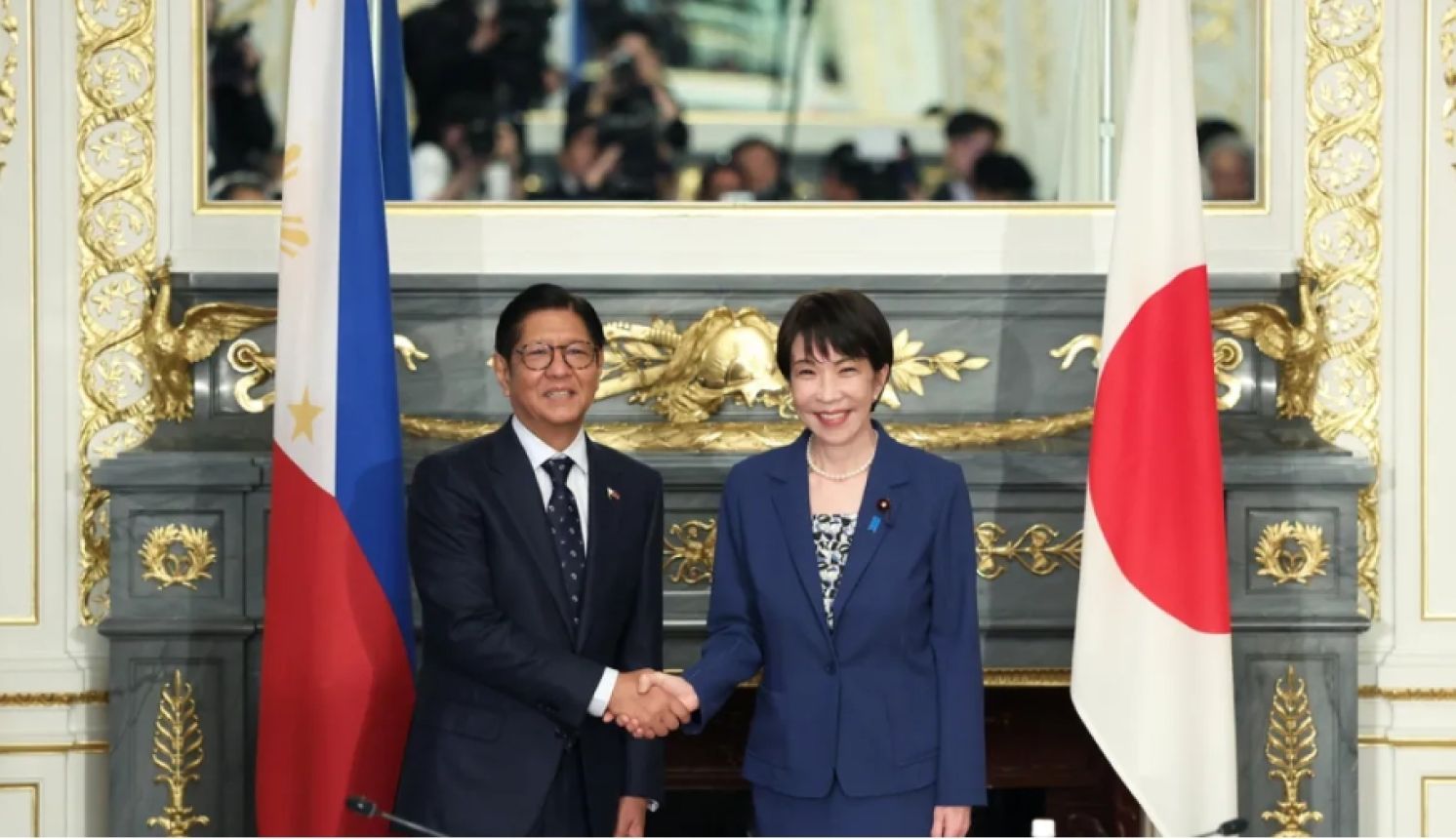
Third, it ignores the reality of Taiwan’s existence. This development seems to have originated from the summit meeting in Tokyo between Prime Minister Sanae Takaichi of Japan and President Ferdinand Marcos Jr. of the Philippines. In their joint statement issued on May 28, the two countries elevated their bilateral relationship to a “Comprehensive Strategic Partnership” and their intention to conduct negotiations on EEZ boundaries. The core significance of this joint statement lies in its expression of security commitments. Although the two sides are not formal military allies, it signifies a higher level of mutual trust in defense cooperation, intelligence sharing, and military equipment transfers. While not explicitly stated, the underlying strategic intent is readily apparent.
Yet it is equally clear that this decision completely ignores Taiwan’s existence and status. This is not merely a legal exclusion but also a political marginalization. If the international community ultimately accepts the delimitation outcome reached by Japan and the Philippines, then it will indirectly negate Taiwan’s claims in the area, further weaken Taiwan’s legal position, and potentially create the mistaken impression in international public opinion that “Taiwan lacks legitimacy in making maritime claims.” This would leave Taiwan even more isolated when facing other maritime disputes in the future.
At the same time, special attention should be paid to a principle of international law: when a state fails to express timely opposition or rejection of foreign actions that affect its interests, such actions may later be interpreted as having been tacitly accepted. Therefore, the Japan–Philippines delimitation negotiations constitute a major challenge involving Taiwan’s sovereignty and long-term national interests and should certainly not be “welcomed.”
As an urgent priority, MOFA should promptly revise its public position and make clear that Taiwan will not recognize any part of the Japan–Philippines EEZ boundary negotiations that affects Taiwan’s rights and interests. At the same time, it should emphasize that, for the sake of maritime security and the joint development and utilization of resources in the Western Pacific, the R.O.C. is an indispensable participant. The government must not allow Japan and the Philippines to continue pressing forward while Taiwan’s diplomacy retreats step by step.
The author is chairman of the Chinese (Taiwan) Society of International Law.
From: https://www.chinatimes.com/opinion/20260602003892-262104?chdtv